
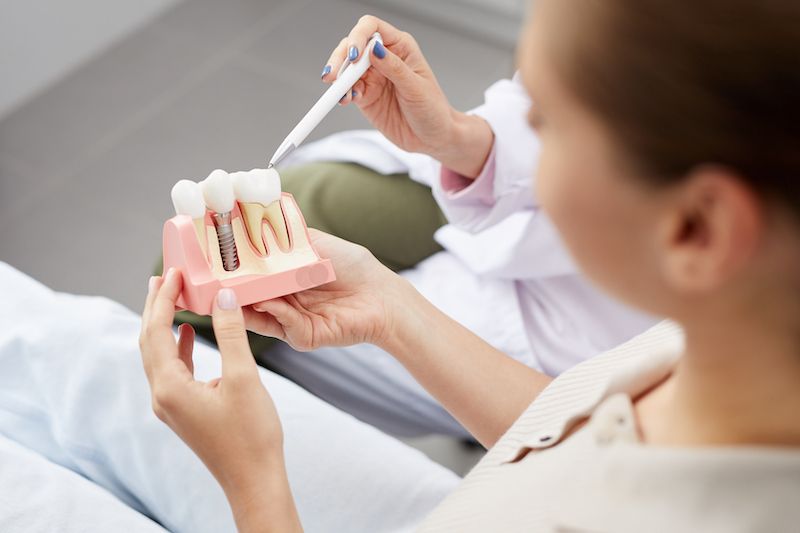
At Dental Minds, we know replacing missing teeth isn’t just about how your smile looks, it’s about protecting your long-term oral health while finding a solution that truly fits your lifestyle, comfort, and budget.
Two of the most popular restorative treatments today are dental implants and dental bridges. Both can restore function and improve the look of your smile, but they work in very different ways and offer distinct benefits. So which option is better for you? Let’s take a closer look at how they compare and how to decide which one is right for your needs.
What are dental implants and dental bridges?
Dental implants
Using advanced imaging and modern implant technology, a dental implant replaces both the root and crown of a missing tooth with exceptional precision and long-term stability. During treatment, a small titanium post is gently placed into the jawbone, where it acts as an artificial tooth root. Over time, the bone naturally bonds with the implant through a process called osseointegration, creating a stable and secure foundation.
Once healing is complete, a custom-made crown is attached to the implant, restoring the appearance and function of the tooth. The final result looks, feels, and performs very much like a natural tooth, allowing you to eat, speak, and smile with confidence again.


Dental bridges
On the other hand, a dental bridge replaces the visible portion of a missing tooth by “bridging” the gap between two neighboring teeth. Traditional bridges use the natural teeth on either side of the space as anchors, which are carefully reshaped to support dental crowns. Between those crowns sits an artificial tooth that fills in the missing area.
Bridges do not require oral surgery and can often be completed in fewer appointments, making them a popular option for patients looking for a quicker restoration solution. While bridges can restore the appearance and basic function of your smile, they do not replace the tooth root or stimulate the jawbone in the same way implants do.
Comparing implants and Bridges: what to know
When deciding between implants and bridges, several key factors come into play. Each option has its advantages and considerations depending on your oral health, preferences, and goals.
Longevity and durability
Implants are known for their long-lasting results. With proper care, they can last decades (often a lifetime) because they integrate with the jawbone and mimic natural tooth structure. Bridges typically have a shorter lifespan, often needing replacement every 7–15 years, depending on wear and oral hygiene.
Impact on surrounding teeth and bone
Because implants replace the tooth root, they help maintain the health of the jawbone and prevent bone loss, which can preserve facial structure over time. Traditional bridges, however, do not stimulate the bone beneath the gap, and they require reshaping of healthy teeth next to the missing tooth to support the restoration.
Treatment and healing
Benefits and considerations for each option
Here’s a closer look at the pros of each treatment, because the right choice varies by patient:
Why do many patients choose implants?
- They preserve jawbone health and help maintain facial shape.
- They function much like natural teeth and often restore full chewing ability.
- They don’t rely on neighboring teeth for support.
- With great oral hygiene, they can last a lifetime.
Why a bridge might be a great choice:
- Treatment is usually completed faster than implants.
- No surgery is required, which may be preferable for some patients.
- Bridges can be more budget-friendly upfront, especially when dental insurance covers a portion of the cost.
Because both options restore function and appearance, the best choice often depends on your individual circumstances. Things like bone density, overall health, oral hygiene habits, budget, and personal preference all play a role.

Making the right decision with your Dental Minds team
Our Logan Square team takes the time to understand your concerns, explain every option clearly, and create a treatment plan in a comfortable, supportive environment designed around you. Every smile is unique, and so is every treatment plan.
Whether you’re leaning toward the lasting durability of an implant or the convenience of a bridge, we’ll walk you through every step and answer your questions clearly and compassionately.
If you’re missing a tooth and wondering what comes next, don’t wait to get answers. Schedule a consultation with Dental Minds today. We’ll help you restore function, confidence, and a natural-looking smile that reflects who you are. Call (312) 820-0330 or book online now to get started.